
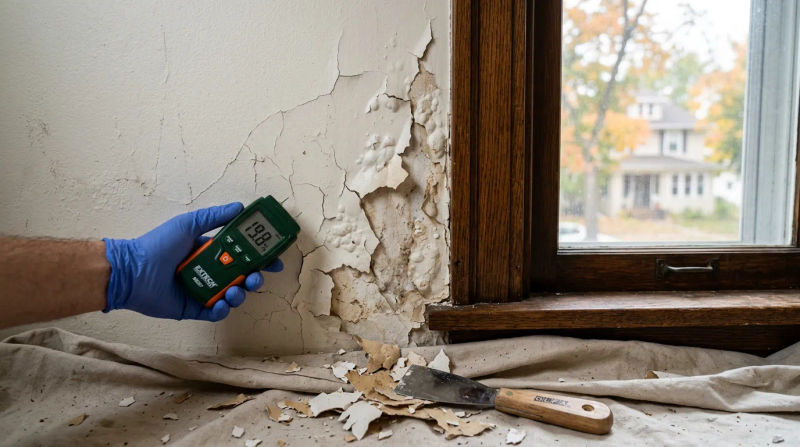
As a property maintenance lead here in the Twin Cities area for over a decade, I’ve seen it all. But one of the most common calls I get starts right around this time of year. September brings that familiar crispness to the air, and as we fire up our furnaces for the first time, little problems that were hiding all summer start to reveal themselves. You might notice a small bubble in the paint on the wall near your living room window, or a bit of cracking on the trim in a bedroom. It’s easy to dismiss, but that small flaw is often a symptom of a larger issue. Understanding what’s causing your interior paint peeling is the first step to a lasting fix.
Peeling paint isn't just a cosmetic issue; it's your home's way of telling you something is wrong. Before you grab a scraper and a can of touch-up paint, it's crucial to play detective and figure out the root cause. A quick cover-up will almost certainly fail again, wasting your time and money.
Common Signs and Symptoms
When we're called to investigate peeling paint, our technicians are trained to look for specific patterns. These clues help us diagnose the problem accurately. Here’s what you should look for:
- Bubbling or Blistering: These are pockets or bubbles where the paint has lifted away from the wall or trim. This almost always indicates that moisture or air is trapped between the paint layer and the surface underneath. The blisters can be small and numerous or one large bubble.
- Cracking and "Alligatoring": This looks like the cracked, scaly skin of an alligator. It often happens when a rigid topcoat of paint is applied over a more flexible one, or when paint ages and loses its elasticity. Extreme temperature fluctuations can also cause this type of cracking as the surface expands and contracts.
- Flaking and Peeling: This is the most obvious sign, where chips or large sheets of paint are actively detaching from the surface. If the peeling takes the primer layer with it, the problem is likely moisture. If it leaves the primer behind, it could be a compatibility issue between the primer and the topcoat.
- Location-Specific Peeling: Pay close attention to where the peeling is happening. Is it concentrated around windows and doors? Is it on walls that face the outside? Paint peeling near windows Minneapolis homes experience is very common due to condensation. You might also see it on bathroom walls without an exhaust fan or on kitchen ceilings. These locations are key indicators of the underlying cause.
What Causes This Problem
Once you’ve identified the what, it’s time to understand the why. In a climate like ours in Minneapolis, with its dramatic temperature swings and humid summers followed by dry, cold winters, several factors are often at play.
- Moisture & Condensation: This is the number one culprit. When the warm, humid air inside your home hits a cold surface - like a window pane or an exterior-facing wall in winter - the moisture in the air condenses into water droplets. This is why condensation causing paint to peel on walls is so prevalent. The water soaks into the paint and the drywall or plaster behind it, breaking the paint's adhesive bond from within. This is especially common in older Minneapolis homes that may lack modern vapor barriers.
- Extreme Temperature Fluctuations: Wood, drywall, and plaster expand and contract with temperature changes. As we transition from a warm September day to a cool night, and then turn on the furnace, these materials are constantly in flux. Paint, especially older, more brittle paint, can't stretch and shrink at the same rate. This stress leads to cracking and eventually peeling. This is a primary reason why paint peels on trim in cold weather, as wood trim is particularly susceptible to this movement.
- Improper Surface Preparation: A paint job is only as good as the surface beneath it. If the previous painter didn't properly clean, sand, and prime the walls, the new paint will never form a strong bond. Painting over dirt, dust, grease, or a glossy, unsanded surface is a recipe for failure. Our crews follow a rigorous, standardized process for surface preparation because we know it’s the most critical step for a durable finish.
- Using the Wrong Paint or Primer: Not all paints are created equal. Applying a latex paint over an old oil-based paint without the correct bonding primer will cause the top layer to peel away. Similarly, using a low-quality paint that lacks flexibility and adhesion will lead to premature failure, especially in high-stress areas like bathrooms or around windows.
- Application in Poor Conditions: Paint needs to be applied within a specific temperature and humidity range to cure correctly. If paint is applied when it's too cold, too hot, or too humid, it won't form a strong, durable film. This creates a weak bond that is likely to fail when stressed by moisture or temperature changes.
- The Age of the Home: In many older properties, walls may have a dozen or more layers of paint. Over time, the very first layer applied decades ago can lose its grip on the original plaster or drywall. When it lets go, it takes all the subsequent layers with it in large sheets.
- A Hidden Leak: While condensation is common, you can't rule out a direct water leak. A failing window seal, a small roof leak, or a plumbing issue inside a wall can introduce moisture that causes paint to bubble and peel. This type of peeling is often accompanied by a soft spot in the drywall and discoloration or staining.
When to Call a Professional
Some small paint issues can be a weekend DIY project, but it's important to know when to bring in an expert.
Consider DIY if:
- The peeling is a very small, isolated spot (e.g., the size of a quarter).
- You are 100% certain it was caused by physical damage (like a furniture scrape) and not moisture.
- The area is not in a high-moisture zone like a bathroom.
It’s time to call a professional when:
- The peeling is widespread, affecting large areas or multiple rooms.
- You see signs of moisture (blistering, staining, soft drywall) but can't find the source. An experienced professional can help diagnose whether it's condensation or a leak.
- The paint is cracking in an "alligatoring" pattern, which often requires extensive scraping and sanding.
- The home was built before 1978. It could have lead-based paint, which requires certified professionals to handle safely.
- You want the job done right the first time. Fixing interior paint peeling correctly involves much more than just painting. A professional team has the organized workflow, tools, and expertise to properly diagnose the cause, prepare the surface, and apply the right products for a long-lasting solution.
Conclusion
Peeling interior paint is more than an eyesore; it’s a signal from your home that needs to be investigated. Whether the cause is seasonal condensation, poor application, or simple old age, ignoring it will only lead to a bigger, more expensive problem down the road. By identifying the signs and understanding the potential causes, you can make an informed decision about how to proceed.
Acting early is the key to protecting your investment. A small area of peeling caused by window condensation is much easier to address now than widespread wall damage will be next spring.
If you notice any of these signs, contact a local painting professional for an inspection. They can help you accurately diagnose the problem and recommend the right course of action.